Carbon Free Future

What CFF Outputs Can Build

CFF does not just produce energy. Its outputs — hydrogen, oxygen, heat, ultra-pure water, brine minerals, and firm nuclear power — are the raw inputs for industries Britain currently depends on imports to sustain. Each section below is a dependency that CFF breaks.

Sovereign Food & Fertiliser Strategy

The CFF programme provides a direct pathway to national food sovereignty by decoupling the UK’s primary agricultural input — nitrogen fertiliser — from the volatility of global natural gas markets.

The Problem: Gas-Linked Fertiliser, Gas-Linked Food Prices

Currently, the UK is a net importer of both the natural gas required to make fertiliser and the fertiliser itself. When global gas prices spike, the cost of British bread and meat follows. The Haber-Bosch process — the industrial foundation of nitrogen fertiliser — consumes roughly 1–2% of global energy and depends almost entirely on fossil gas as its hydrogen feedstock.

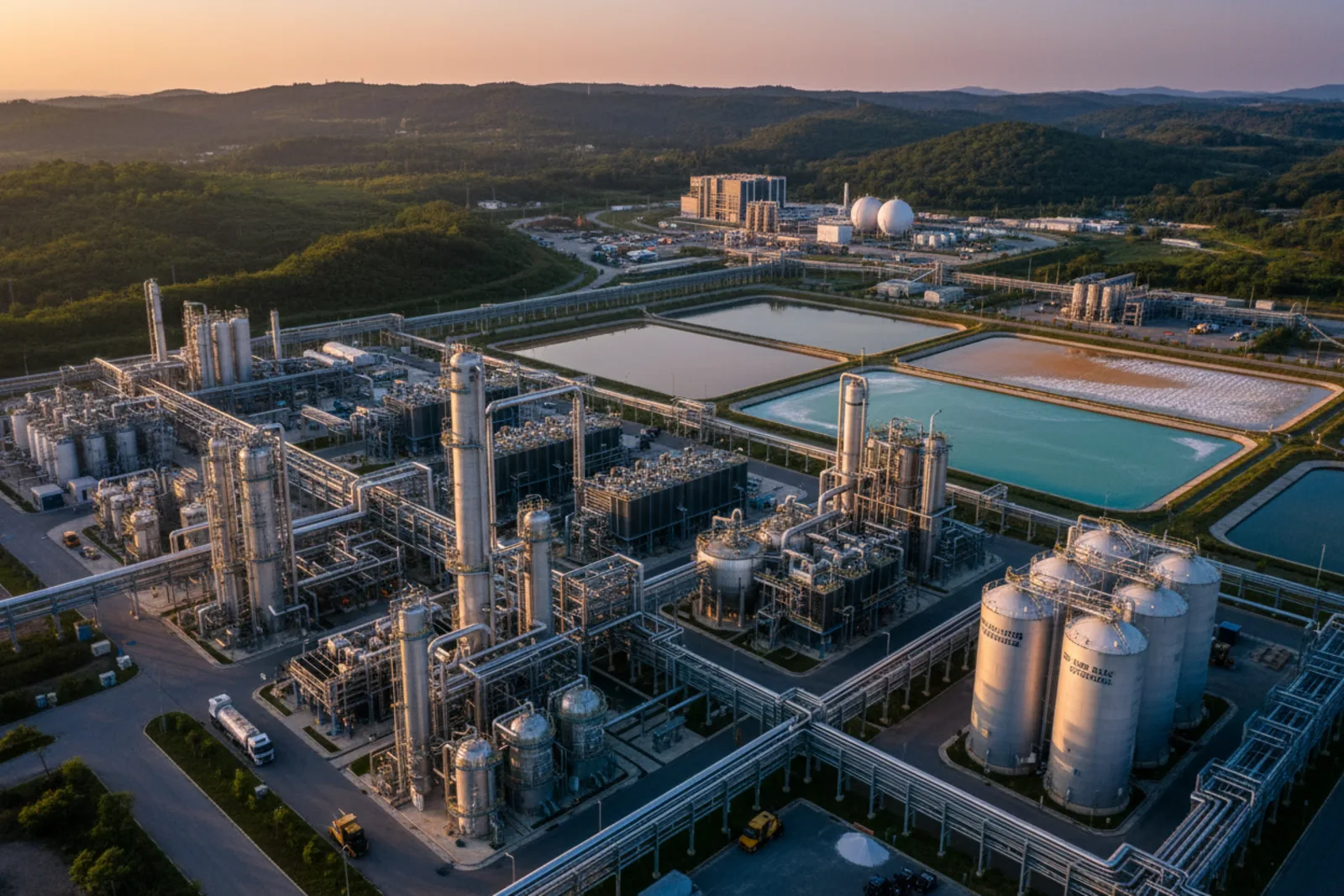
CFF breaks this link by using domestic nuclear energy and seawater to create a Green Ammonia backbone. Hydrogen from electrolysis replaces fossil gas. The nitrogen comes from air. The result is ammonium nitrate fertiliser made entirely from sovereign inputs — no gas import, no price exposure, no foreign leverage.
Decoupling from Global Volatility

The strategic advantage of CFF-linked fertiliser production is the removal of external leverage:

📊 Price Stability

By using a fixed-cost nuclear baseload rather than spot-market natural gas, CFF can offer 20-year fixed-price fertiliser contracts to British farmers. Predictable input costs mean predictable food costs.

🇬🇧 Import Independence

One single CFF site, allocating just 10% of its hydrogen output, can produce enough ammonium nitrate (~850,000 tonnes) to fertilise nearly the entire UK wheat crop.

\u267B\uFE0F Zero-Waste Integration

Unlike traditional plants, CFF fertiliser facilities utilise site-surplus oxygen for nitric acid production and brine minerals for soil health, creating a circular agricultural economy.

The Green Ammonia Pathway

The production chain is straightforward and uses only sovereign inputs:

1

Electrolysis

CFF SOEC splits water into hydrogen and oxygen using nuclear heat and power

2

Haber-Bosch

Green hydrogen + atmospheric nitrogen → green ammonia (NH₃)

3

Nitric Acid

Site-surplus oxygen oxidises ammonia into nitric acid (HNO₃)

4

Fertiliser

Ammonia + nitric acid → ammonium nitrate (AN) fertiliser, ready for British farms

Every input — energy, hydrogen, oxygen, nitrogen, water — is produced domestically. No gas import at any stage.

A National Security Asset

This is not just an industrial spillover. It is a national security instrument. Fertiliser underpins the food chain. If the UK cannot make its own, any disruption to global gas markets — sanctions, conflicts, supply shocks — translates directly into higher food prices and agricultural vulnerability.

CFF ensures that even in a global energy crisis, Britain can still feed itself at a predictable, sovereign price. The link between foreign gas and British bread is permanently broken.
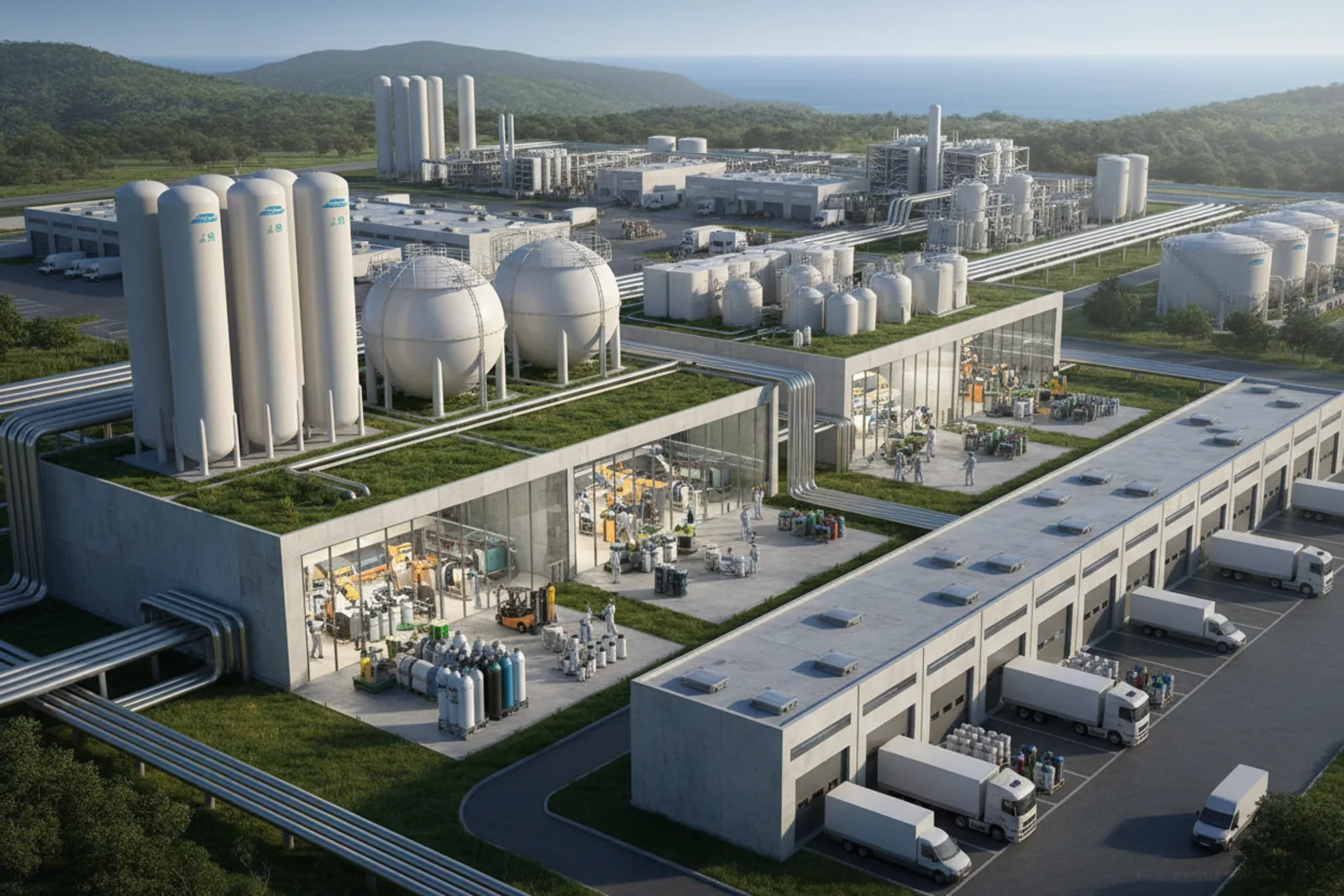
British Steel from British Hydrogen

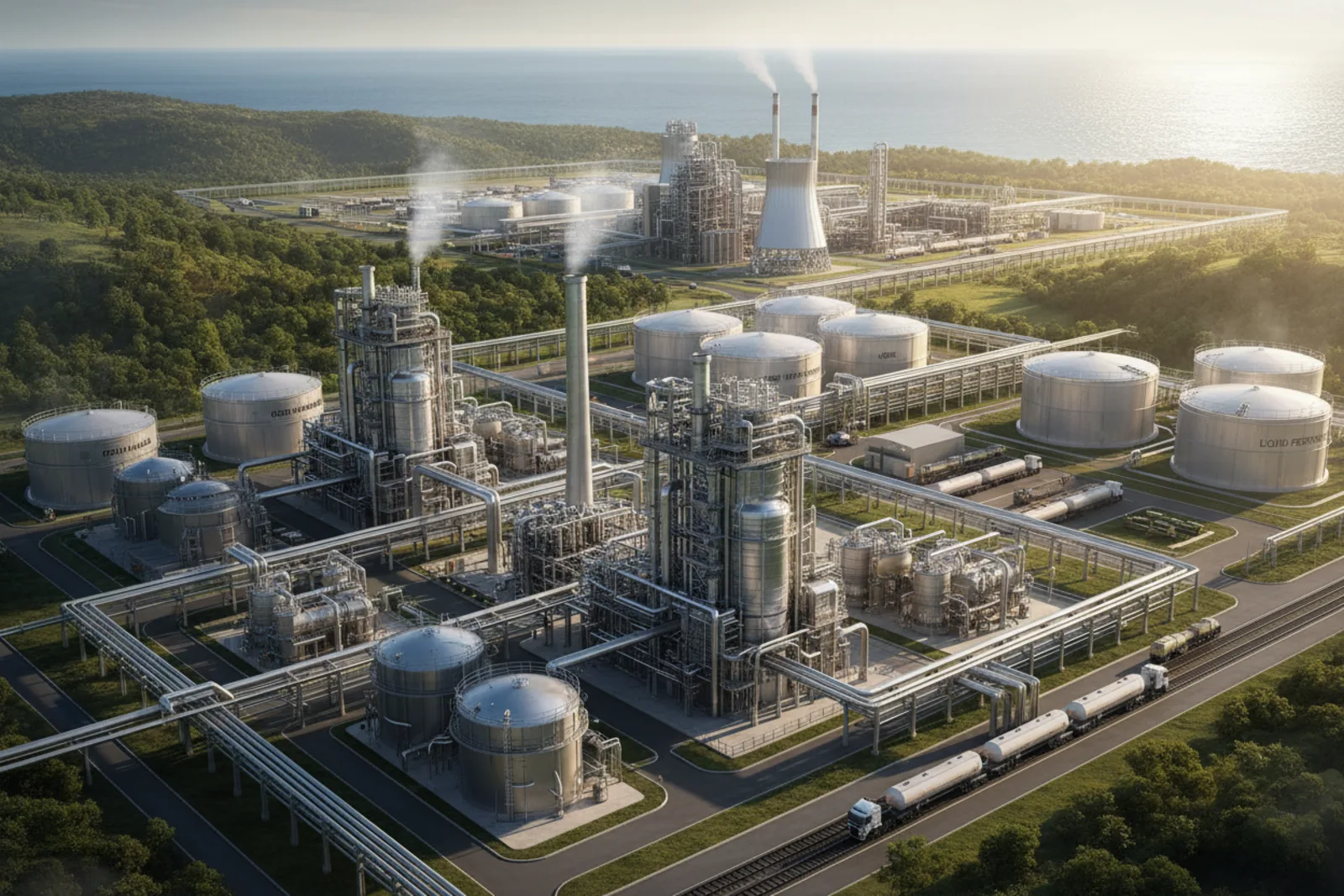
The UK imports the majority of its steel. CFF hydrogen enables Direct Reduced Iron (DRI) steelmaking — replacing coking coal with green H\u2082 and breaking one of the oldest fossil dependencies in heavy industry.

The Dependency

British steelmaking has been in decline for decades. Port Talbot, Scunthorpe, and other legacy sites depend on imported coking coal and blast furnace technology that cannot be decarbonised. The result: Britain imports millions of tonnes of steel annually, losing industrial capability, jobs, and strategic autonomy.

Sweden\u2019s HYBRIT project has already proven that hydrogen-based DRI steelmaking works at commercial scale. Britain has the same opportunity — but with CFF, it has the hydrogen supply to do it at national scale.

What CFF Provides

Green Hydrogen

Replaces coking coal as the reducing agent in iron ore processing

Surplus Oxygen

Feeds electric arc furnaces and improves combustion efficiency in downstream processing

Firm Power

DRI-EAF steelmaking is electricity-intensive — CFF provides baseload nuclear power alongside the hydrogen

Process Heat

Waste heat from SMRs can preheat inputs, reducing total energy demand per tonne of steel

Britain does not have to watch its steel industry die. CFF provides the hydrogen, the oxygen, the power, and the heat to rebuild it — cleaner, sovereign, and competitive. No coking coal. No import dependency. British steel from British hydrogen.

Decarbonising Foundation Materials

Cement and glass manufacturing depend on extreme temperatures currently supplied by fossil gas. CFF provides hydrogen-fired kilns and oxy-fuel combustion using surplus oxygen — eliminating the fossil input without sacrificing output.

🧱 Cement

Cement production is responsible for roughly 8% of global CO\u2082 emissions. The thermal energy required to heat kilns to ~1,450°C currently comes from burning fossil fuels. CFF hydrogen can fire those kilns directly, while surplus oxygen enables oxy-fuel combustion that produces a concentrated CO\u2082 stream — easier to capture if carbon capture is added later.

The UK imports a growing share of its cement. Domestic production using CFF outputs reverses that trend and anchors construction supply chains at home.

🪟 Glass

Glass furnaces run at ~1,500–1,700°C and are traditionally gas-fired. Hydrogen combustion reaches these temperatures cleanly, and when combined with CFF oxygen (oxy-hydrogen combustion), the flame temperature is higher, more controllable, and the exhaust is primarily water vapour.

British glass manufacturing — containers, flat glass, fibre glass, specialist products — can be decarbonised without moving production offshore. The energy input changes. The product does not.

Cement and glass are foundation materials — every home, road, hospital, and school depends on them. CFF ensures Britain can make them without fossil gas, without imports, and without offshoring the carbon problem to someone else\u2019s atmosphere.

Sovereign E-Fuels for the Military & Emergency Services

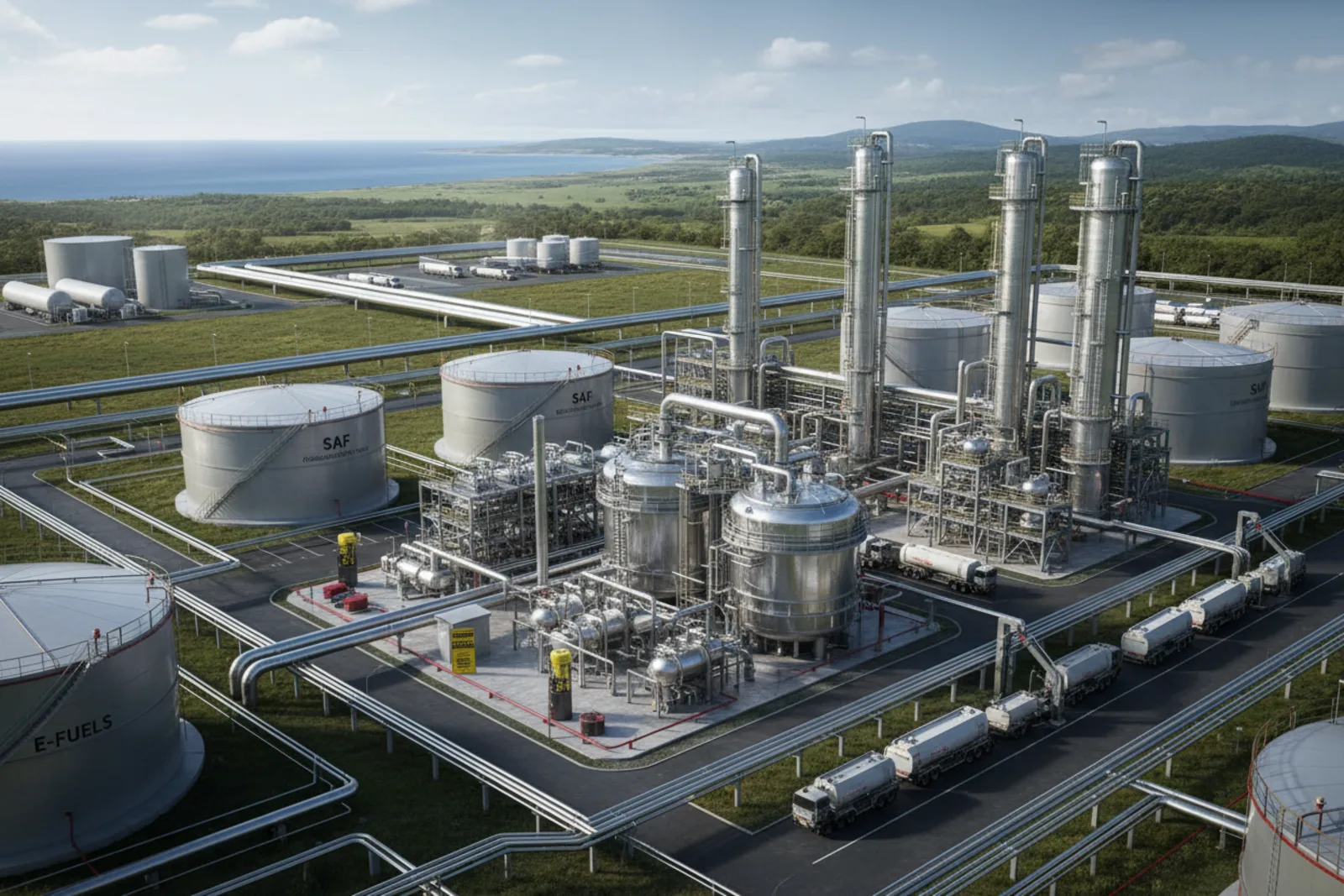
Military vehicles, naval vessels, emergency generators, and legacy fleet vehicles are not switching to battery electric. CFF provides the pathway to synthetic fuels that free the MoD from dependence on Middle Eastern oil.

The Defence Fuel Problem

The British military runs on diesel and kerosene. Tanks, armoured vehicles, warships, transport aircraft, and field generators all require liquid hydrocarbon fuels. Electrification is not viable for most of these platforms — range, weight, refuelling speed, and operational conditions rule it out.

Today, that fuel comes from global oil markets. In a conflict scenario, those supply lines are the first vulnerability an adversary would target. A sovereign nation should not depend on imported fossil fuel to defend itself.

The CFF E-Fuel Pathway

1

Green Hydrogen

CFF SOEC electrolysis at massive scale

2

CO₂ Capture

Direct air capture or industrial point-source CO₂

3

Fischer-Tropsch Synthesis

H₂ + CO₂ → synthetic diesel, kerosene, and jet fuel

4

Drop-In Fuel

Chemically identical to conventional fuels — no engine modifications required

Who This Serves

🚜Armoured Vehicles & Tanks
Royal Navy Surface Fleet & Auxiliaries
✈️RAF Transport & Tanker Aircraft
🚑Emergency Service Fleets & Generators
🚚Legacy Commercial Vehicles & Plant

A sovereign nation that cannot fuel its own military without importing oil is not truly sovereign. CFF provides the hydrogen. Fischer-Tropsch provides the chemistry. The result is drop-in synthetic fuel made entirely on British soil — for as long as the reactors run.

Ultra-Pure Water for British Chip Fabs

Semiconductor fabrication requires enormous quantities of ultra-pure water, reliable power, and industrial cooling. CFF produces all three — creating a unique proposition no other country can match at this scale.

Why Water Is the Hidden Constraint

A modern semiconductor fab consumes roughly 30,000–50,000 m\u00B3 of ultra-pure water per day. That water must be purified to 18.2 megohm-cm resistivity — essentially no dissolved solids at all. Most fabs are built near rivers or reservoirs, creating water-stress conflicts with agriculture and residential supply.

CFF\u2019s Unit 8 desalination already produces 50,000 m\u00B3/day of fresh water per site — the exact volume a major fab needs. The water starts cleaner than any river source because it comes from reverse osmosis. Upgrading to semiconductor-grade ultra-pure water is a shorter, cheaper purification step than starting from river water.

💧

Ultra-Pure Water

Desalinated water from Unit 8 is already cleaner than river or municipal sources. Final polishing to semiconductor grade is a single purification step, not the multi-stage treatment other sites require.

Firm Baseload Power

Chip fabs run 24/7/365 and cannot tolerate power interruptions. CFF’s nuclear baseload is the most reliable power source available — no weather dependency, no intermittency.

❄️

Industrial Cooling

Fabs generate enormous heat loads. Coastal CFF sites have access to seawater cooling, and waste heat from fab operations can feed back into the Heat Halo district heating system.

Every country chasing semiconductor sovereignty is scrambling for water, power, and cooling separately. CFF bundles all three in one coastal package. If Britain wants to build chip fabs, CFF is the only programme that provides the infrastructure to do it without cannibalising existing water supplies.

Britain as a Global Methanol Bunkering Hub

Green methanol is rapidly becoming the preferred maritime fuel for the next generation of container ships. Maersk is already ordering methanol-powered vessels. CFF can make Britain the country that supplies them.

Why Methanol, Not Just Ammonia

Ammonia is a strong candidate for deep-sea shipping fuel, but methanol has distinct advantages for container shipping, coastal vessels, and port operations: it is liquid at ambient temperature, easier to handle, less toxic, and already has an established global supply chain. Major shipping lines are placing orders for methanol-powered ships now, not as a future option.

Green methanol is produced by combining green hydrogen with captured CO\u2082. CFF provides the hydrogen at scale. CO\u2082 can come from direct air capture or industrial point sources co-located at CFF sites.

The Port Opportunity

CFF\u2019s 28 coastal sites are already positioned near Britain\u2019s major port infrastructure. Green methanol produced on-site or piped to nearby ports turns British harbours into the cleanest bunkering stops in Northern Europe.

Port revenue increases. Bunkering fees flow into British hands. Shipping companies route through Britain because the fuel is available, green, and competitively priced. That is not an environmental aspiration — it is a commercial gravity well.

The maritime energy transition is already happening. The only question is where ships refuel. CFF makes the answer Britain — with green methanol produced from sovereign hydrogen, available at coastal sites already positioned near the country\u2019s busiest shipping lanes.

Processing Critical Minerals at Home

The UK imports virtually all of its processed rare earths, lithium, cobalt, and nickel. The refining processes require high-temperature hydrogen, clean water, and cheap energy — all CFF outputs. Britain can process imported raw ores domestically instead of sending them to China.

The Processing Gap

Britain\u2019s critical mineral vulnerability is not primarily about mining. It is about processing. China controls roughly 60–90% of global processing capacity for rare earths, lithium compounds, cobalt sulphate, and battery-grade nickel. Even when raw ores are mined in Australia, Africa, or South America, they are shipped to China for refining before returning as usable materials.

These refining processes are energy-intensive, water-intensive, and often require hydrogen as a reducing agent. CFF provides all three inputs at scale, at stable cost, and under sovereign control.

🔋

Lithium Refining

Battery-grade lithium carbonate and lithium hydroxide require purification with ultra-pure water and thermal processing. CFF provides both. Britain could import raw spodumene or brine concentrate and refine it domestically.

⚙️

Rare Earth Separation

Rare earth processing requires solvent extraction, hydrogen reduction, and high-purity water. CFF outputs match these requirements directly. Britain could break China’s near-monopoly on processed rare earths.

🧪

Cobalt & Nickel Processing

Battery-grade cobalt sulphate and nickel sulphate require hydrometallurgical processing with hydrogen, heat, and clean water. CFF provides the conditions to do this at scale on British soil.

🇬🇧

Supply Chain Sovereignty

Processing at CFF sites means Britain controls the refining step that currently gives China strategic leverage over the entire battery and electronics supply chain. The raw ores can come from anywhere. The value-add stays British.

The battery age is coming whether Britain is ready or not. The question is whether Britain processes its own materials or pays China to do it. CFF provides the hydrogen, water, heat, and energy to bring that processing home — and keep the strategic value inside British borders.

Sovereign Industrial Gases

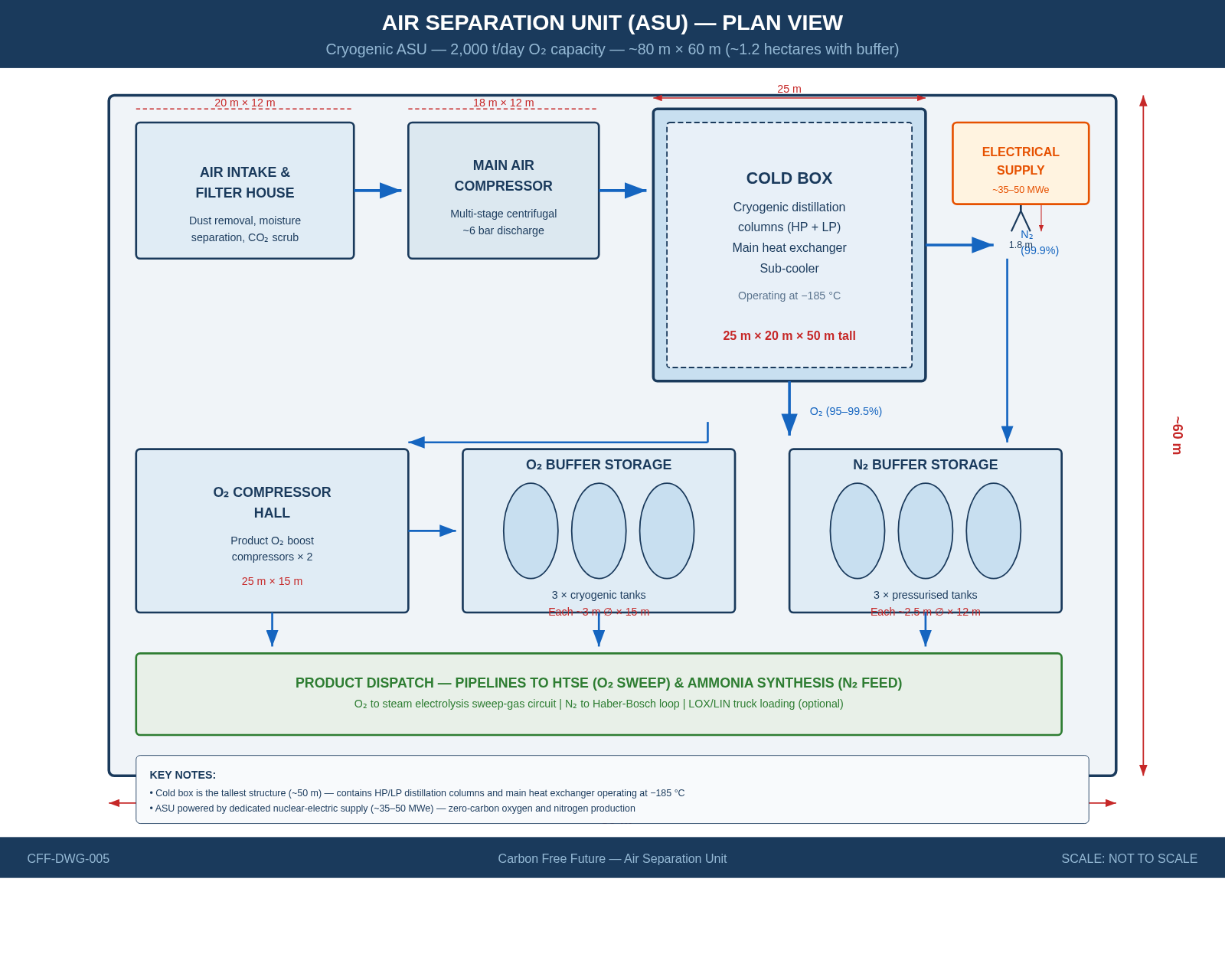
Air separation units co-located at CFF sites produce nitrogen and argon at scale alongside the existing oxygen stream. The UK currently imports industrial gases. CFF removes that dependency entirely.

🧪

Oxygen (O₂)

Already produced as a co-product of SOEC electrolysis. NHS gets priority, then steel, glass, cement, chemicals, and wastewater treatment. CFF is already the UK’s largest oxygen source.

🌫️

Nitrogen (N₂)

Air separation units at CFF sites produce nitrogen for food packaging (modified atmosphere), pharmaceutical manufacturing, electronics fabrication, chemical blanketing, and cryogenic applications.

🔬

Argon (Ar)

Essential for welding (shielding gas), steel and aluminium production, semiconductor manufacturing, and specialist lighting. Currently imported or produced by a small number of private operators.

Industrial gases are invisible infrastructure — they underpin food packaging, hospital operations, welding, steel production, electronics, and dozens of other sectors. CFF co-locates air separation with electrolysis to produce oxygen, nitrogen, and argon from a single sovereign platform. No foreign supplier. No price exposure. No dependency.

The Sovereignty Argument

Every section on this page describes an import dependency that CFF breaks. Not through aspiration, but through the physical outputs the programme already produces: hydrogen, oxygen, heat, ultra-pure water, brine minerals, and firm nuclear electricity.

Fertiliser for the food chain. Steel for construction. Cement and glass for housing. Synthetic fuel for defence. Ultra-pure water for semiconductors. Green methanol for shipping. Critical mineral processing for batteries. Industrial gases for manufacturing.

No other programme on Earth produces all of these from a single integrated platform. CFF does not just generate energy. It generates industrial independence — and that independence is the foundation of a sovereign nation.